Breaking: New Hybrid Approach Unlocks Enterprise AI Potential
Enterprise AI teams face a critical bottleneck: business users leverage intuitive low-code tools but stall on custom model logic and production deployment, while data scientists wield full-code environments yet produce work that remains siloed in inaccessible notebooks. A rising solution—hybrid development—is now gaining traction to reconcile these conflicting demands.
.png)
According to industry analysts, the hybrid model integrates visual drag-and-drop interfaces with programmable backends, allowing non-technical stakeholders to participate without sacrificing the depth needed for complex AI tasks. We're seeing a paradigm shift where enterprises no longer choose between speed and power,
says Dr. Elena Torres, AI strategy lead at Gartner. Hybrid platforms are becoming the standard for scalable, auditable AI.
The urgency is driven by soaring expectations: businesses want AI deployments that are both rapid and robust. A recent McKinsey survey found that 78% of companies now prioritize AI projects that can move from prototype to production within weeks.
Background: The Origin of the Divide
Low-code platforms emerged to democratize AI, letting business analysts build models with minimal coding. Yet these tools often hit walls when faced with novel algorithms or enterprise-grade orchestration needs.
Conversely, full-code environments like Jupyter notebooks give data scientists complete control. However, such work is frequently isolated, lacking version control, collaboration features, and audit trails required for regulated industries.
This chasm has slowed enterprise AI adoption. The notebook workflow is a creativity killer for teams,
notes Michael Chen, CTO of DataForge Consulting. You end up with brilliant models that cannot be integrated or trusted.
What This Means: A Unified Future for Enterprise AI
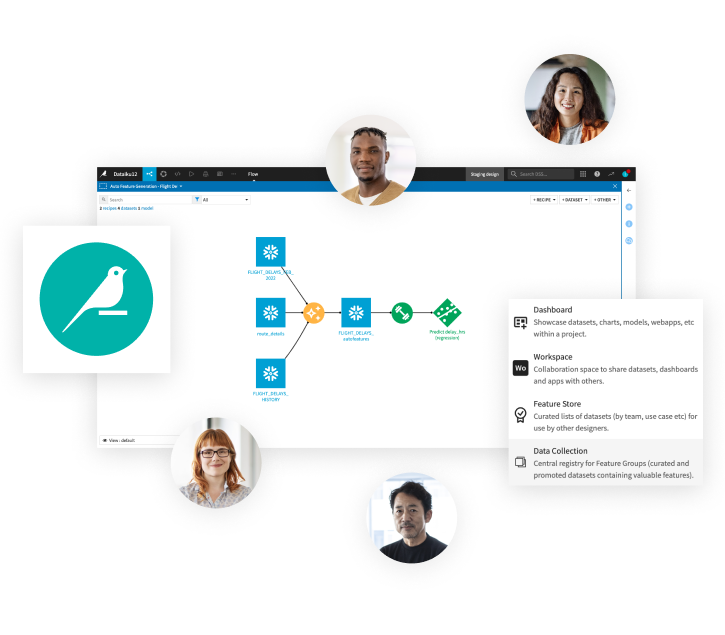
The hybrid approach promises to collapse this divide. By allowing low-code visual layers for rapid experimentation and full-code hooks for customization, teams can iterate faster while ensuring production readiness.
Key benefits include:
- Faster time-to-market as business users and data scientists collaborate on a shared platform.
- Enhanced governance through centralized versioning, audit logs, and role-based access.
- Reduced technical debt by avoiding custom integrations between disparate tools.
For enterprises, the practical upshot is clear: hybrid development enables AI projects that are both agile and compliant. Early adopters report up to 40% shorter development cycles and a 30% increase in model deployment rates.
As the field matures, expect more platforms to fuse low-code simplicity with full-code extensibility. The future is not either/or—it's both,
concludes Dr. Torres. Enterprises that ignore this hybrid model risk falling behind.
This is a developing story. Check back for updates on platform releases and user experiences.