Breaking: Avian Vision Pushes Biological Limits
Birds have evolved some of the most advanced vision systems on Earth, surpassing human capabilities in speed, range, and precision. New research reveals how natural selection drove avian eyes to extreme adaptations, including a unique blood-vessel arrangement that maximizes retinal oxygen supply.
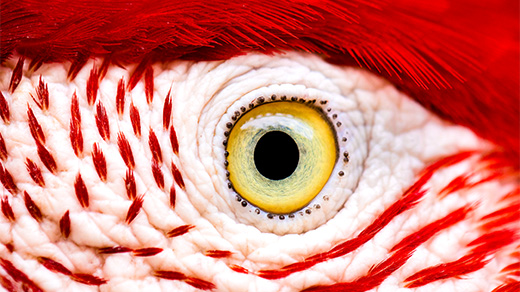
When an optometrist shines a bright light into a human eye, the shadow of a branching network of blood vessels becomes visible. These vessels feed the retina but also block some incoming light. Birds have circumvented this trade-off with pecten oculi, a comb-like structure that delivers oxygen without obstructing vision.
The Evolutionary Pressure Behind Bird Eyes
Birds require rapid, clear vision for flight and hunting. Over millions of years, their eyes have adapted to process images at speeds far beyond mammals. Dr. Julia Hart, an evolutionary biologist at the University of Oxford, explains: “The avian eye is a marvel of engineering—its retina has more photoreceptors per square millimeter than any other vertebrate.”
Unlike humans, birds have a fixed lens shape and rely on rapid head movement to focus. This reduces the need for a large, flexible lens but demands exceptional image processing. “The pecten allows birds to maintain high metabolic rates in the retina without casting shadows,” adds Professor Miguel Alves, a comparative anatomist at the University of São Paulo.
Background: The Blood-Vessel Trade-Off
All vertebrates need blood vessels to nourish the retina. In mammals, these vessels lie in front of the photoreceptors, casting slight shadows that the brain learns to ignore. Birds evolved a different strategy. Their pecten folds into the vitreous humor, supplying oxygen from the side rather than the front.
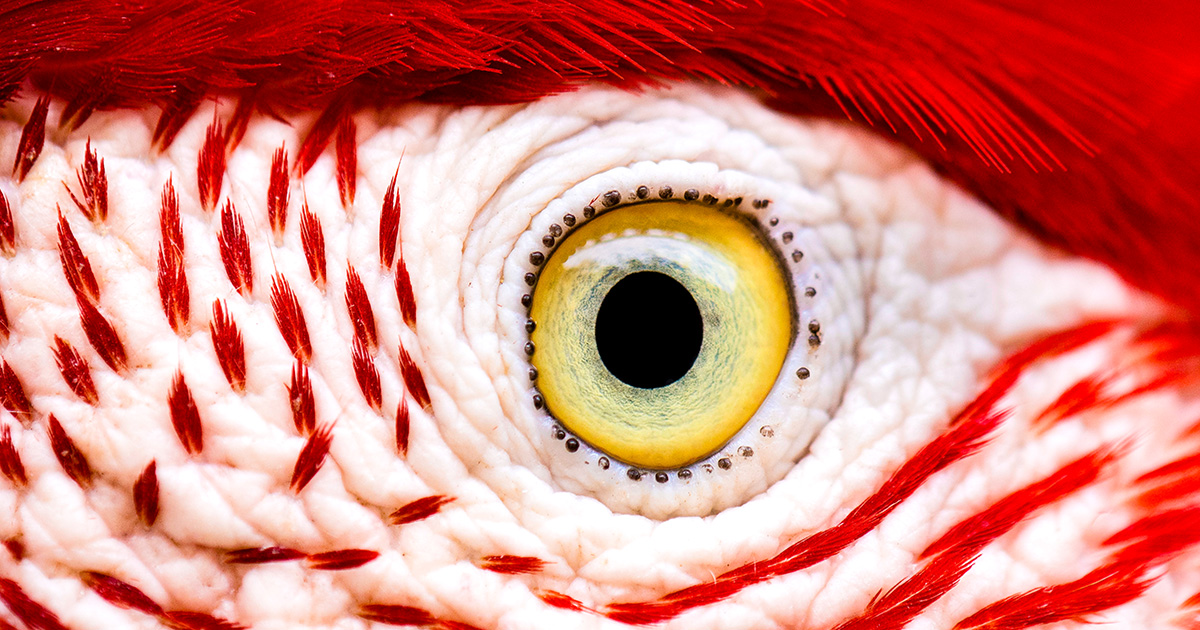
This adaptation reduces light scattering and allows more photoreceptors to be packed into the retina. “It’s like routing the power cables underground instead of hanging them overhead,” says Dr. Hart. The result: birds can see fine details and fast movements that would blur for humans.
What This Means for Understanding Evolution
The study highlights how extreme adaptations arise from intense selection pressures. “The bird eye is a prime example of evolution ‘bumping against the envelope of physical limits’,” notes Professor Alves. Understanding these limits could inform bio-inspired engineering, such as better camera sensors or drone vision.
For human medicine, the findings may offer clues for treating retinal diseases. By studying how birds avoid vascular shadows, researchers might develop new ways to deliver oxygen to the human retina without obstructing light. However, Dr. Hart cautions: “We can’t simply copy the pecten—it’s a complex structure adapted for the avian body plan.”
The research appears in Nature Ecology & Evolution. Further studies are planned to examine how bird vision varies across species—from eagles spotting prey miles away to hummingbirds tracking rapid wing beats.